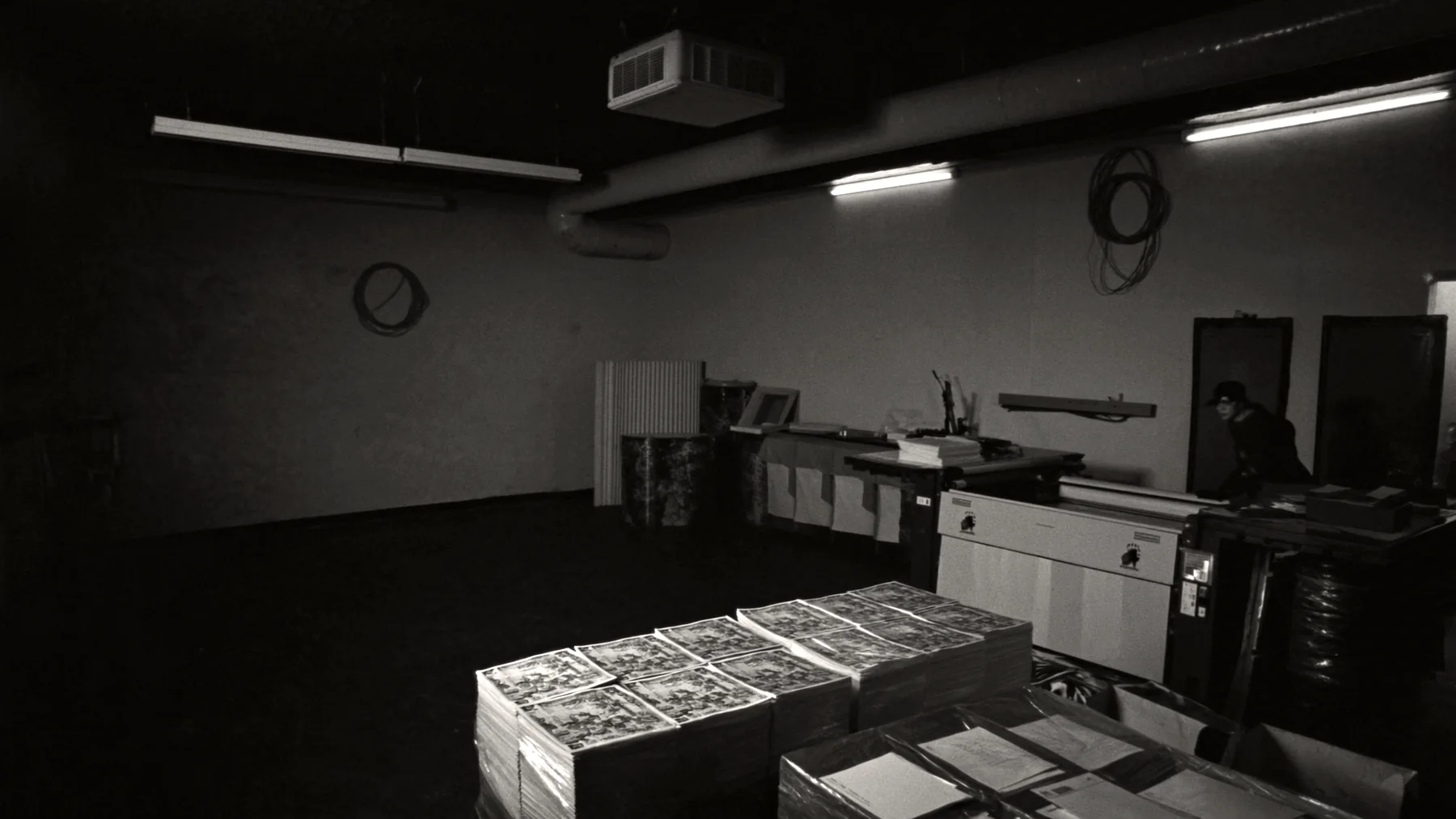
Nine stations, one piece
A list goes in.
Scans come back.
Every step between those two sentences is a place a mailing gets cheaper, slower, or thrown out at the dock. This is all nine of them, with the clock, the standard and the way each one fails.
Presort, addressing, tray and pallet are done on this floor. Nothing is brokered out and nothing waits on a partner’s schedule.
Every piece carries an Intelligent Mail barcode with a unique serial, so delivery is reported as a curve across days rather than as a promised date.
Loads are dropped at the sectional center rather than the retail counter, which is both a lower rate and a shorter clock.
The spine
One 6 by 11 postcard, followed from the file arriving to the last delivery scan.
The elapsed column is measured from the moment a clean file lands, on a run of about forty thousand pieces. It is a working schedule, not a guarantee, and the two stations that actually decide it are the third and the eighth.
01Hour 0
The list arrives, and is put through address hygiene
Standardised and coded against the postal address file, then run against the national change of address database. This is the least interesting station and the one that decides the whole economics: an undeliverable piece is paid for twice, once to print it and once to post it, and it never scans.
- Standard
- CASS certified coding, then a move update inside the 95 day window that automation rates require.
- Fails when
- A list is exported from a CRM with the suite number in a second field nobody mapped. Roughly one in twelve records, every time.
02Hour 2
Counted, deduplicated and presorted against the current scheme
The presort decides the postage, and postage is the majority of the invoice. Pieces fall into rate tiers by how deep into the postal network they can be handed off already sorted: five digit, three digit, area distribution centre, then mixed, which is the one you pay for when nothing else qualifies.
- Standard
- Scheme files current to the month. A saturation rate needs the route covered to the density the class requires, so the count is checked route by route before anything is quoted.
- Fails when
- A list is sorted to last quarter’s scheme. It passes software and gets rejected at induction.
03Hour 6
Imposed, plated and proofed
Eight up on a 25 by 38 sheet at 14 point coated one side. A single hard proof is signed before the plates are burned, on the actual stock, because the whole run exists in a few hours and there is nothing to correct afterwards.
- Standard
- Address block, barcode clear zone and indicia positioned to the postal template, not to the designer’s grid.
- Fails when
- Artwork arrives in RGB with a spot colour named after the client’s brand guide. Half a day, every time.

04Hour 14
Printed
Sheetfed offset, four colour to the face and one to the back, which is the format nearly every postcard actually wants. Digital takes anything under about five thousand, where plate cost stops making sense.
- Standard
- Densities pulled and logged at the start, the middle and the end of the run.
- Fails when
- Nothing much. This is the most reliable station on the floor and it is the one clients worry about.
05Hour 18
Cut, scored and counted into lifts
Guillotined to finished size and banded in lifts that match the addressing feed. A postcard heavier than about 12 point and larger than 6 by 11 stops being a letter and becomes a flat, which is a different rate and a different machine.
- Standard
- Finished size and thickness checked against the automation envelope before a single piece is addressed.
- Fails when
- A design is approved at 6 by 11 and a bleed pushes it to 6 by 11 and a quarter. That quarter inch changes the postage on the entire run.
06Hour 22
Inkjet addressed, and the barcode goes on
The address and the Intelligent Mail barcode are applied in one pass in presort order. The barcode is the product: it carries a routing code and a serial unique to that single card, which is the only reason anything downstream can be tracked at all.
- Standard
- Barcode read and verified inline. Anything unreadable is pulled rather than trayed.
- Fails when
- The design puts a dark tint or a photograph under the barcode clear zone. It prints, it looks correct, and the scanners cannot see it.
07Hour 26
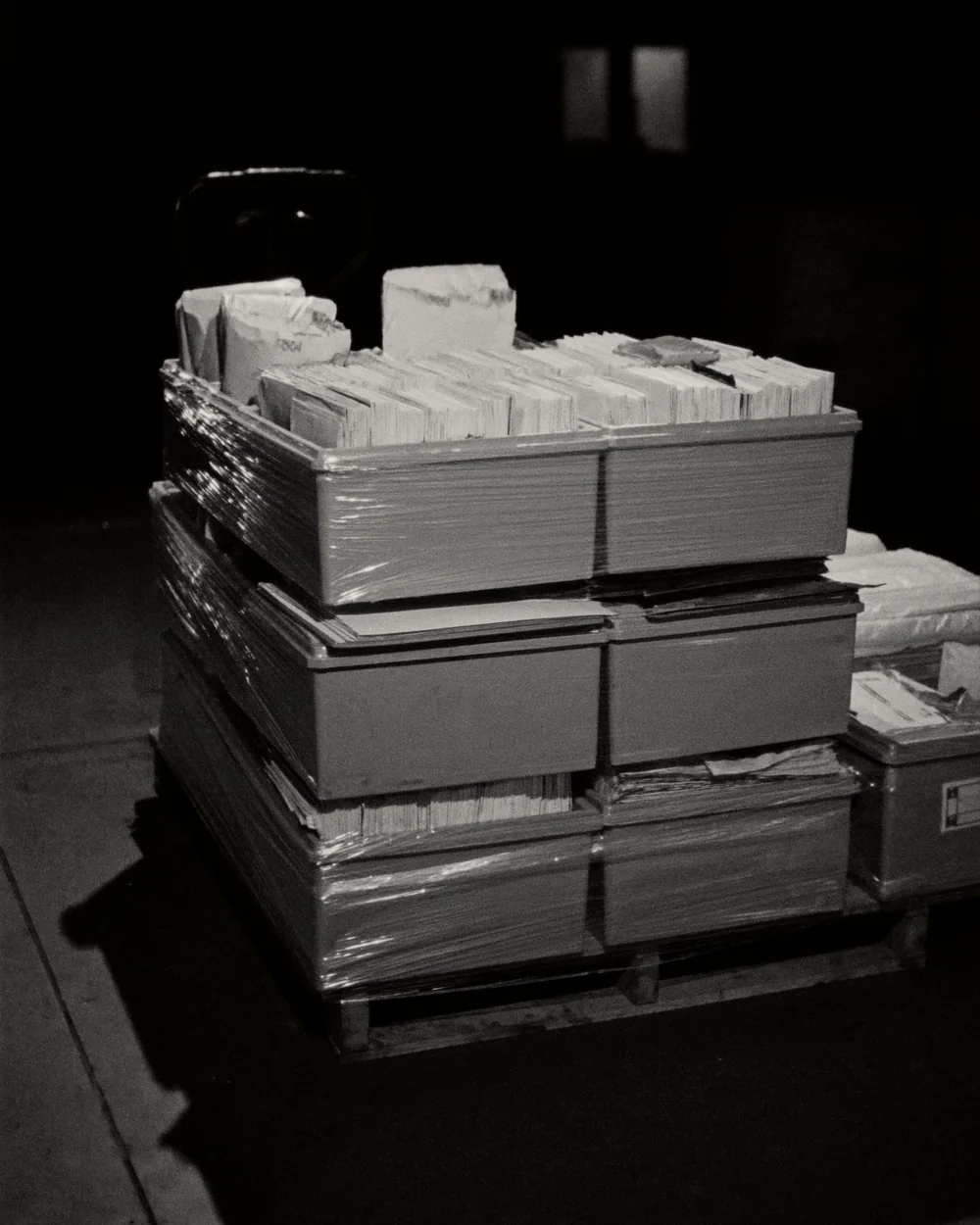
Trayed, sacked, palletised, and the paperwork made
The name of the company, and the least glamorous four hours in the building. Letters into trays with the sort label on the end, trays onto pallets in scheme order, pallet placards, and the postage statement that has to agree with the presort report to the piece.
- Standard
- Statement, presort report and physical count reconciled before the truck is loaded, not at the dock.
- Fails when
- A count is off by one tray. The whole load is held while somebody finds it.
08Hour 30
Inducted at the sectional centre
Driven to the processing facility and entered there rather than handed over the counter locally. Entering the network further downstream is a lower rate and it removes a day, and for a regional mailing it is usually the single largest saving available after the presort itself.
- Standard
- Appointment booked against the load, not against the calendar. An unappointed truck waits.
- Fails when
- A mailing is signed off late on a Thursday. Two days of clock disappear into the weekend and nobody counted them in the schedule.
09Day 3 to 9
Scans come back
Each piece is read several times as it moves, and the readings are what you actually get instead of a delivery date: a curve showing how the drop landed across days. That is the number that matters, because it tells the phone room and the front counter which mornings to be staffed for.
- Standard
- Daily delivery reporting for the life of the drop, plus a closing summary against the original count.
- Fails when
- Nobody asked for it. Most mailers never see their own scan data and cannot tell a bad list from a bad offer.
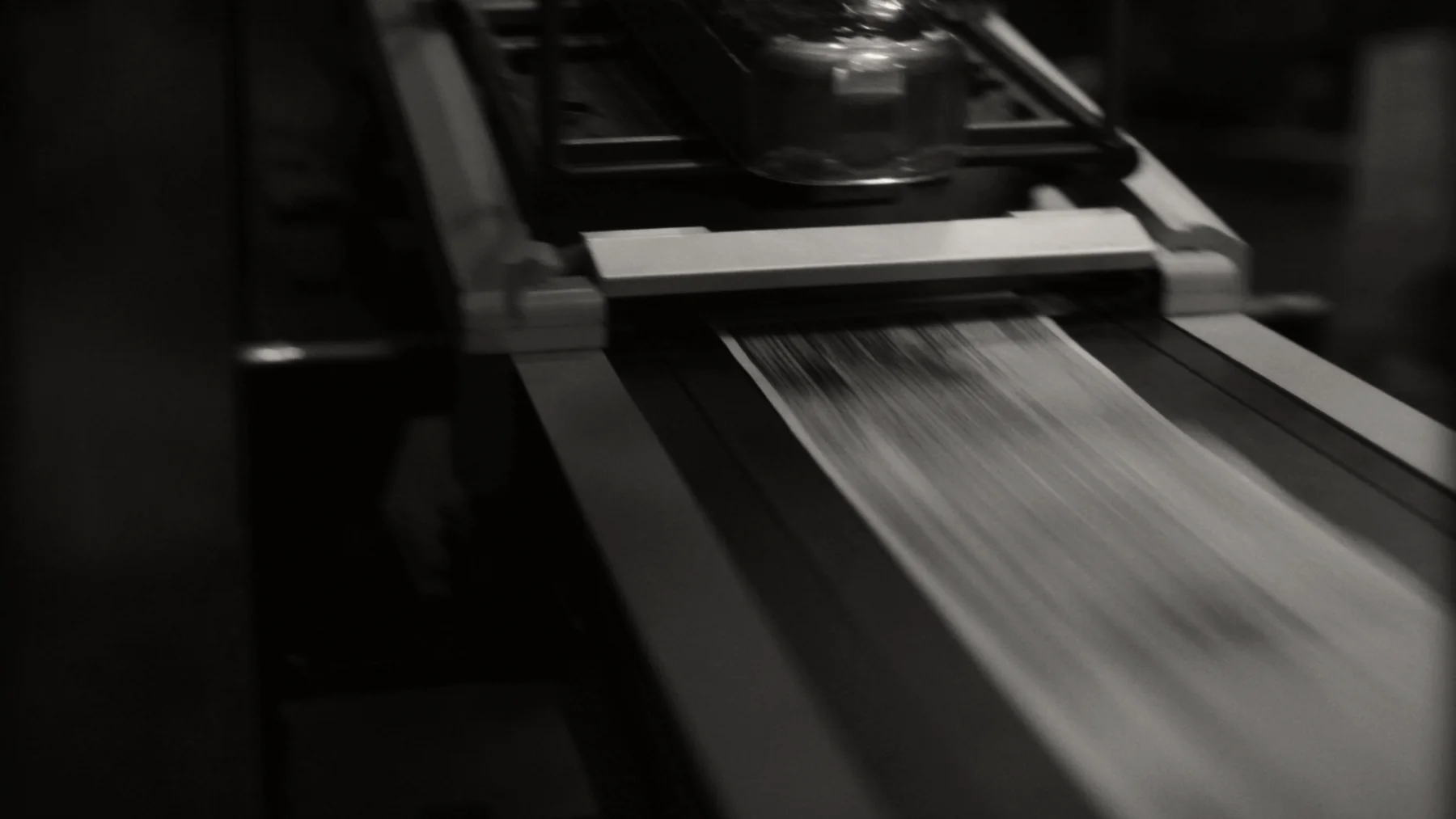
Rate tiers
What the presort is actually buying, per thousand.
The four tiers a mailing can fall into, cheapest first. Nothing here is a quotation. The point of the table is the shape of it: the difference between the top row and the bottom row is larger than the difference between printing well and printing badly.
| Tier | Postage | Production | Total | What it requires |
|---|---|---|---|---|
| Saturation, carrier route | $212 | $188 | $400 | Every active address on the route, or near enough that the class allows it. No list at all, just a map. |
| High density, carrier route | $246 | $188 | $434 | A minimum count per route. The usual landing place for a trades mailing around a completed job. |
| Five digit presort | $281 | $196 | $477 | Enough pieces per ZIP to fill a tray. A targeted list sorted properly. |
| Mixed | $334 | $196 | $530 | Nothing qualified. This is what a scattered list costs, and it is the number a first quotation usually hides. |
Two mailings of the same size, the same card and the same press time can sit thirty per cent apart on this table, and the difference is entirely in how the list was built. That conversation happens before the artwork, not after it.
Formats
What runs here, and where the edges are.
Postcards at 5 by 9, 6 by 9 and 6 by 11, on 14 point coated one side as standard and up to 16 point where the card has to survive a mailbox in February. Folded self mailers, tabbed to the postal spec rather than to taste. Letters in number 10 and 6 by 9 envelopes, matched and inserted up to four pieces.
Below about five thousand pieces the plate cost stops earning its place and the run moves to digital, which also makes versioning free. Above about a hundred and twenty thousand a single drop starts to distort a small market and is better split across two weeks, which is a scheduling conversation rather than a production one.
Large format, banners and vehicle graphics are produced on the same floor because the same buyer asks for them, and they have nothing to do with any of the nine stations above.
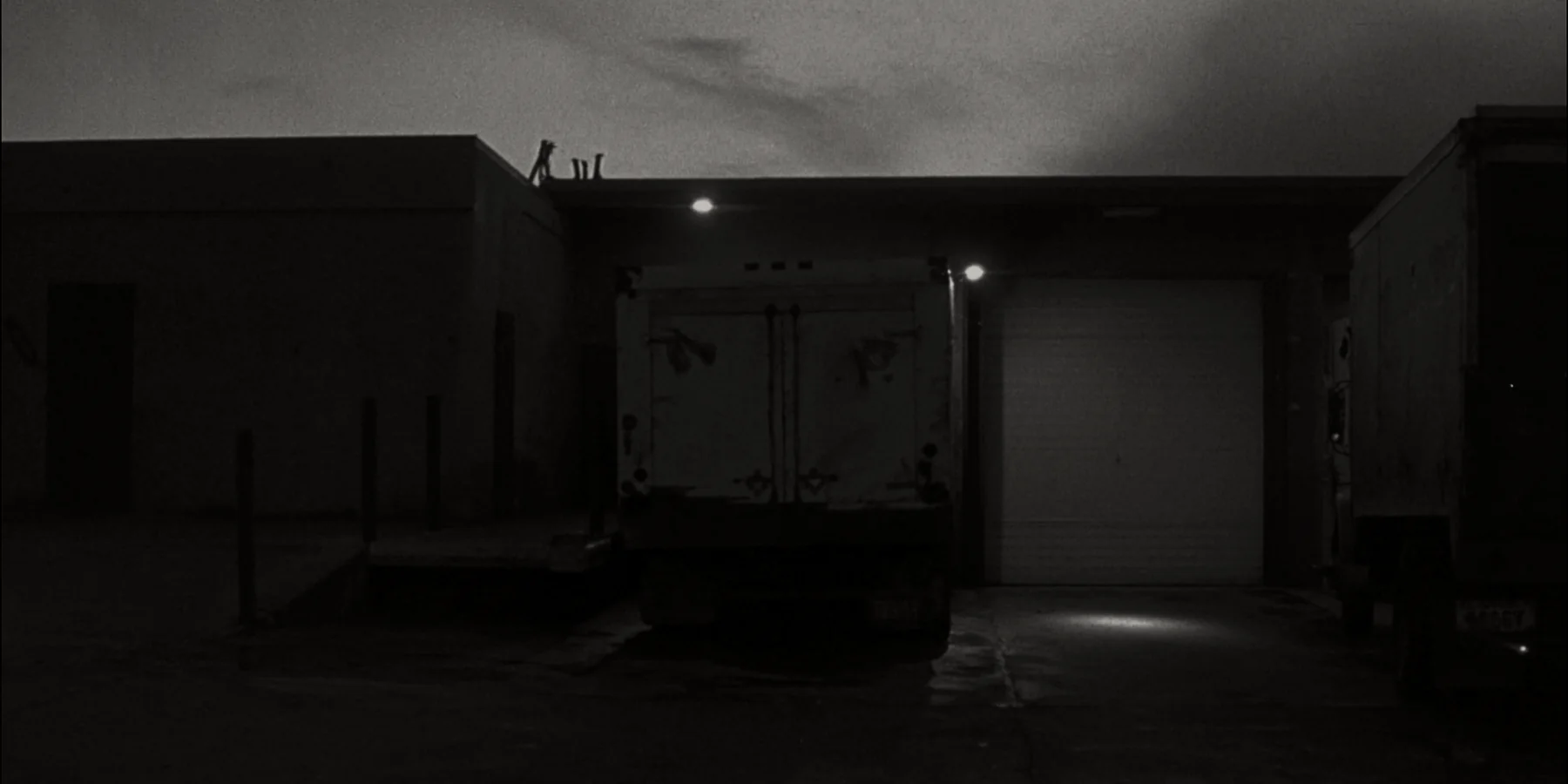
The plant is on 96th Street, and the dock is round the back.
The plant
123 Main St, Suite C
Liberty, MO 64068
Office door at the front, dock at the rear off the service road. Deliveries and pickups to the dock between seven and three.
| Office, Monday to Friday | 8 to 5 |
|---|---|
| Floor | Two shifts, 6 to 11 |
| Saturday, Sunday | Closed |
A file received before noon is presorted the same day. Everything on the spine above starts from that.
To quote a job
Send the count, the finished size, the stock and whether you have a list or a map. Those four answers are the whole estimate. Artwork is not needed and neither is a meeting.
(816) 555-0192